supergramp
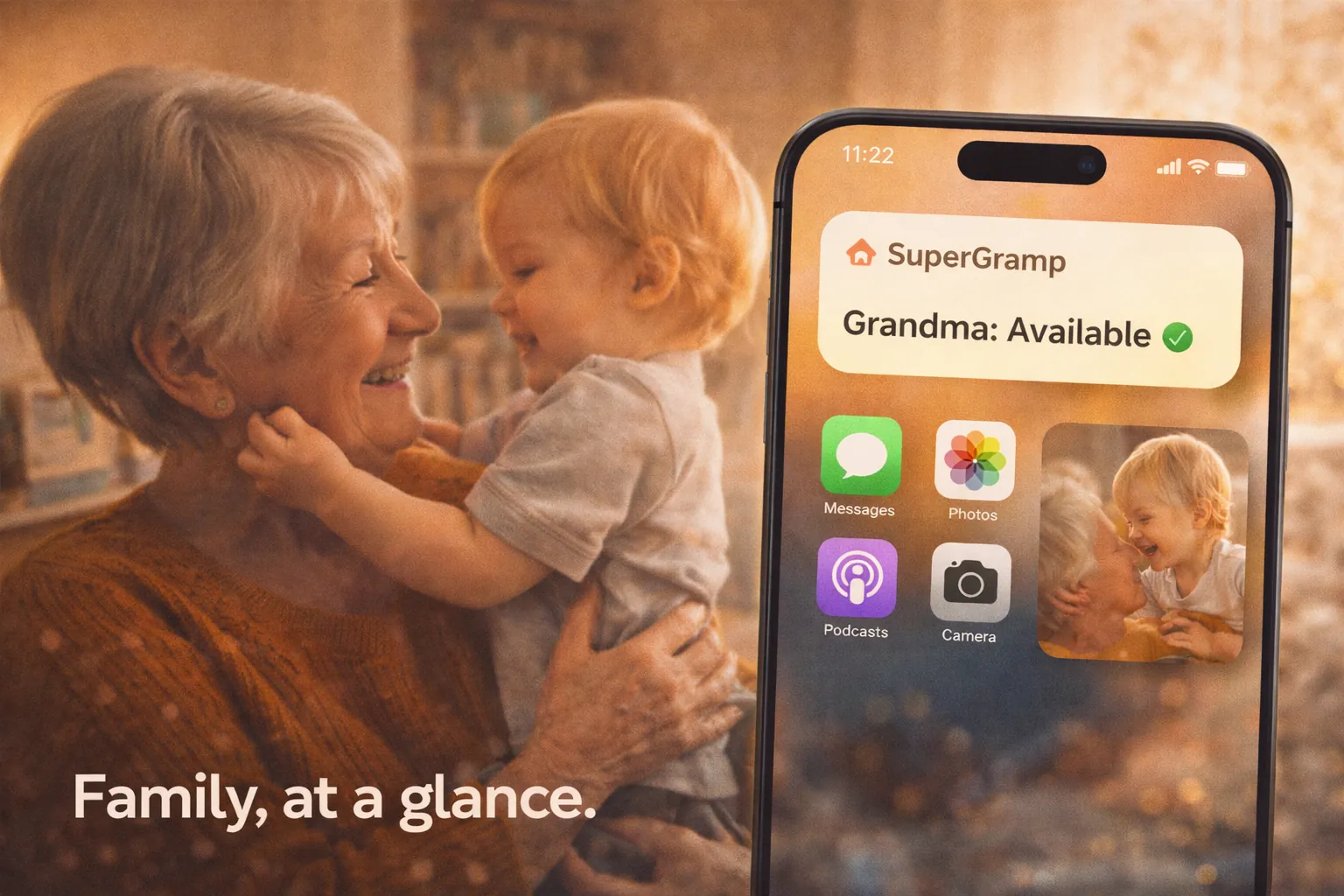
Glanceable availability widget for family resource synchronization.
Problem Defined
"Generational care nodes are under-utilized due to coordination friction."
Strategic Context
Families waste cycles on simple availability checks.
Competitive Imbalance
Messaging friction prevents dynamic resource use.
System Hypothesis
A single-purpose widget eliminates informal childcare overhead.
Process Architecture
How the system was designed, tested, and refined.
DEFINE
Identify coordination friction in family resource synchronization.
- • Audited family caregiver schedules
- • Interviewed generational nodes
- • Mapped availability gaps
- • Assumed the friction was technical, it was actually psychological
- • The barrier is the "ask"; system must make availability passive
- • Pivoted to a glanceable widget model for passive visibility
MAP
Map calendar signals to glanceable status indicators.
- • Mapped calendar availability triggers
- • Designed widget status states
- • Initial status codes were too professional/clinical for family use
- • Tone matters in domestic coordination
- • Simplified status to "Available", "Focus", "Away" with custom icons
VALIDATE
Test spontaneous resource utilization.
- • Tested widget with 10 extended family networks
- • Measured spontaneous bookings
- • Users forgot to update status manually
- • Visibility MUST be automated or synced to existing behaviors
- • Integrated bi-directional calendar sync as the primary driver
EXECUTE
Build the glanceable widget and sync layer.
- • iOS widget layer
- • Calendar sync engine
- • Push signal system
- • Over-engineered the detail views
- • The widget is the product; the app is just config
- • Focused 90% of development effort on widget glanceability
MEASURE
Calculate reduction in synchronization overhead.
- • Update frequency
- • Booking ratio
- • Message volume reduction
- • Early data was skewed by the novelty effect
- • Sustained use requires zero-touch maintenance
- • Introduced historical likelihood forecasting to auto-populate status
Rule Application
How doctrine was operationalized.
Intellectual Rigor
01_INT- • Defining familial friction points
- • Mapping generational nodes
80% reduction in sync overhead achieved in pilot groups
Tactical Execution
02_TAC- • Shipping single-purpose widget first
- • Short sync cycles
Widget live on testflight in 7 days
Human Calibration
03_HUM- • Reducing the "burden of asking"
- • Designing for glanceable awareness
Zero manual scheduling messages required for 5x increase in resource use
Machine Leverage
04_AI- • Likelihood forecasting based on historical routines
- • Anomaly detection in schedules
AI predicts availability shifts before they are manually logged
Product Architecture
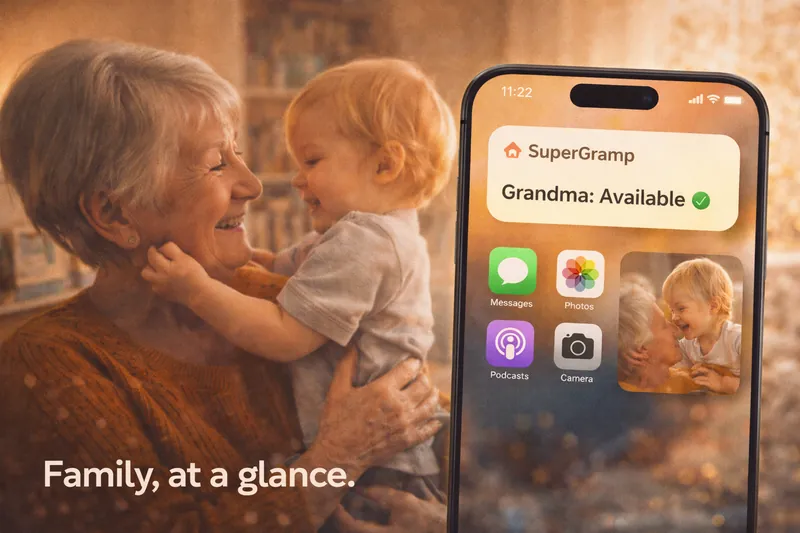
Calendar synchronization and low-friction mobile widgets.
AI Leverage
Likelihood forecasting based on historical routines.
Outcomes & Learnings
Eliminated noise and increased shared resource visibility.