iMediate App
AI conflict resolution infrastructure for structured co-parenting.
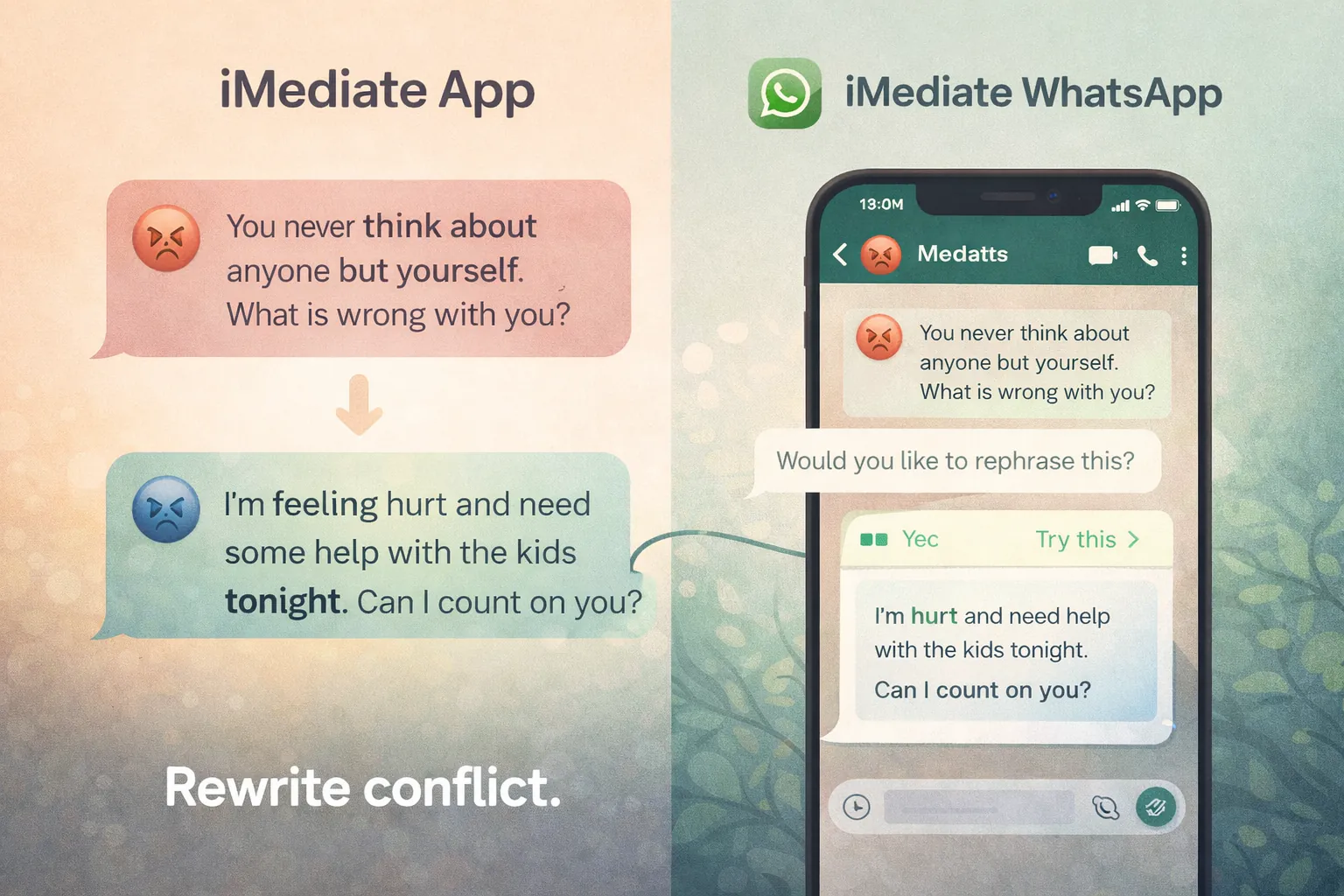
Problem Defined
"High-conflict parents lack structured communication, driving continuous legal friction."
Strategic Context
Co-parenting conflict drives legal costs and emotional trauma.
Competitive Imbalance
Legal systems are reactive. Parents lack real-time tools to de-escalate.
System Hypothesis
NVC reframing at the point of communication reduces conflict recurrence.
Process Architecture
How the system was designed, tested, and refined.
DEFINE
Identify core system friction in high-conflict co-parenting.
- • Interviewed legal stakeholders
- • Reviewed court communication logs
- • Identified escalation triggers
- • Initial framing ignored emotional volatility
- • Over-indexed on legal compliance vs relational health
- • Conflict is often driven by lack of structured delay in communication
- • Integrated NVC-based friction points to slow down reactive messaging
MAP
Visualize the communication circuit between parents and legal systems.
- • Mapped message flow to court-ready exports
- • Identified decision nodes for NVC intervention
- • Early models were too rigid for emergency coordination
- • Excluded third-party legal oversight
- • System must allow for both ritual and emergency modes
- • Added bypass protocols for critical medical/logistical updates
VALIDATE
Test NVC reframing efficacy on de-escalation.
- • Ran low-fidelity pilot with 10 high-conflict pairs
- • Measured sentiment shift after NVC prompts
- • Users bypassed complex reframing during active disputes
- • Reframing must be invisible or near-instant to be accepted
- • Tuned AI to provide subtle nudges rather than full rewrites
EXECUTE
Build the core conflict resolution engine.
- • NVC processing layer
- • Structured audit logs
- • Direct legal export
- • Over-engineered the initial calendar sync
- • Communication integrity is more valuable than feature depth
- • Prioritized tamper-proof logging over complex scheduling features
MEASURE
Calculate reduction in legal friction and cost.
- • Litigation cost reduction
- • Dispute resolution velocity
- • Escalation rate
- • Early metrics didn't capture long-term behavioral change
- • Structural adherence is the only leading indicator of success
- • Introduced ongoing behavior calibration loops
Rule Application
How doctrine was operationalized.
Intellectual Rigor
01_INT- • Defining measurable friction points
- • Mapping legal logic before code
No feature shipped without hypothetical conflict reduction metric
Tactical Execution
02_TAC- • Shipping core intervention first
- • Prioritizing audit integrity
Audit trail parity achieved before UI polish
Human Calibration
03_HUM- • Preserving user agency in messaging
- • Reducing cognitive load during stress
Manual bypass included for high-urgency logistics
Machine Leverage
04_AI- • AI-driven synthesis of relational patterns
- • Automated nudge logic
AI handles message sentiment without removing human intent
Product Architecture
NVC engine, calendar extraction, structured audit logs.
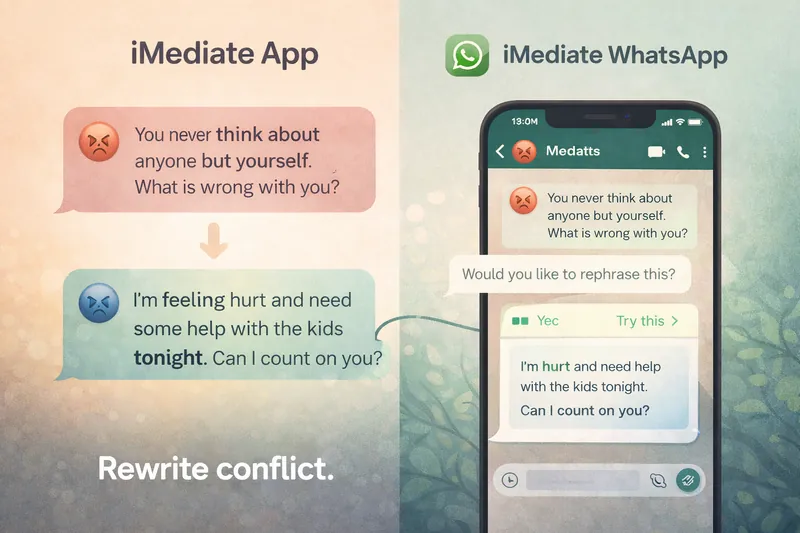
AI Leverage
Real-time NVC message reframing.
Outcomes & Learnings
Behavioral nudges reduce system-wide conflict and legal overhead.
Launch System