Roofdraft
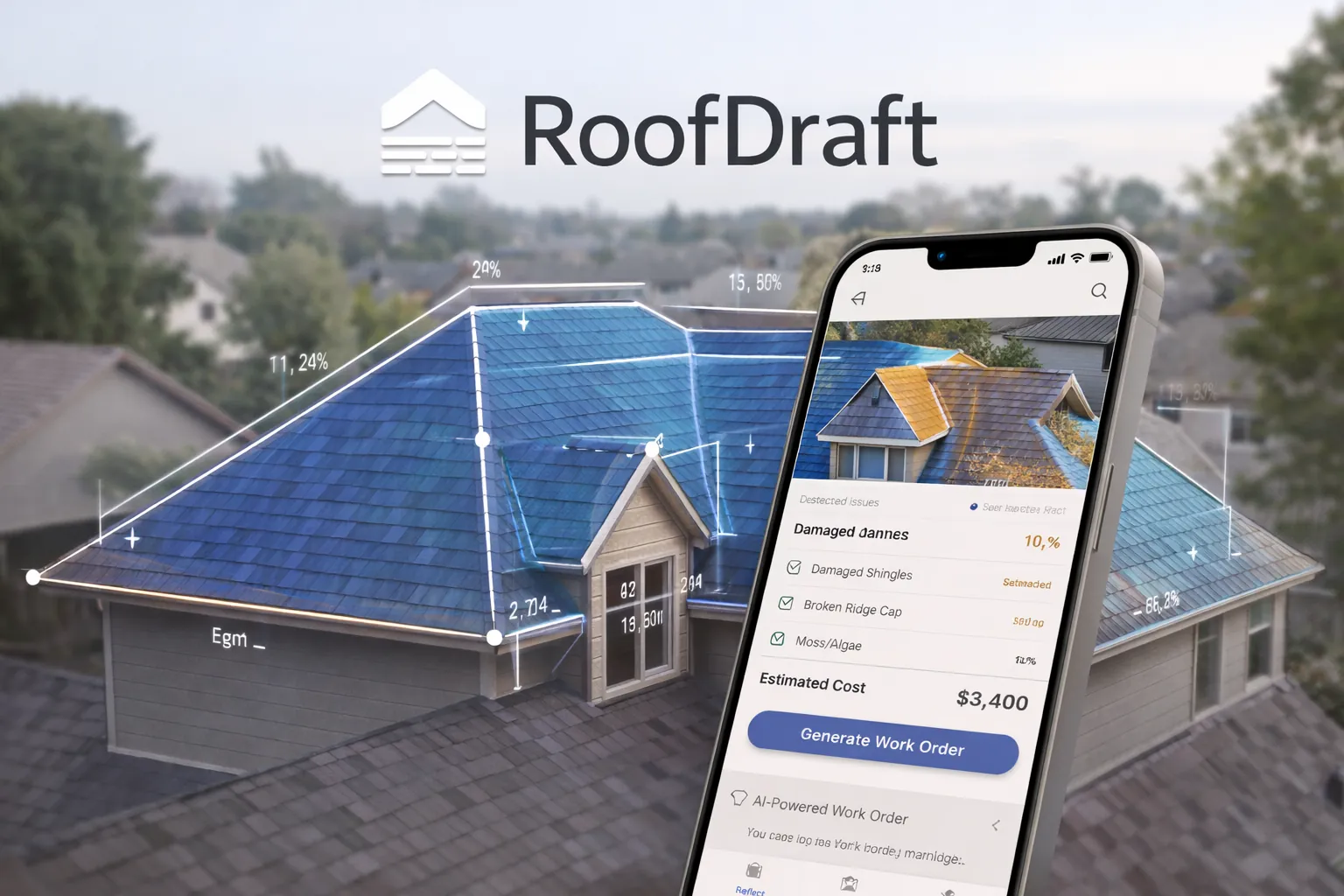
Professional roofing inspection, estimation, and project management platform.
Problem Defined
"Roofing contractors rely on fragmented workflows—disconnected scanning, manual estimation, and unclear project tracking—extending project cycles and delaying client acceptance."
Strategic Context
Roofing contractors need end-to-end visibility from initial site capture through client-accepted estimates to reduce friction and accelerate project completion.
Competitive Imbalance
Existing tools lack integrated AR capture, AI-powered estimation, and professional project management in a single contractor-friendly workflow.
System Hypothesis
Combining AR LiDAR scanning, AI-assisted estimation, and integrated project management in a unified mobile-first platform accelerates contractor decision velocity and client handoff.
Process Architecture
How the system was designed, tested, and refined.
DEFINE
Identify workflow friction in roofing contractor estimation and project management.
- • Conducted time-motion studies with roofing crews
- • Audited estimation accuracy and client acceptance patterns
- • Mapped project handoff delays
- • Focused solely on capture speed, ignored estimation quality and client communication
- • The true friction is the gap between site data and client-ready estimates; client acceptance is the critical milestone
- • Reframed project around complete workflow from capture through estimate acceptance
MAP
Visualize the integrated capture-to-estimate pipeline.
- • Mapped AR capture workflow to estimate generation
- • Identified AI decision nodes for work order creation
- • Traced project status handoff points
- • Initial maps treated estimation as post-capture step rather than integrated process
- • Estimation quality directly impacts client acceptance; must be embedded in workflow, not bolted on
- • Integrated AI-assisted estimation directly into capture review and measurement steps
VALIDATE
Test estimate accuracy and client acceptance impact.
- • Ran side-by-side tests with traditional estimation methods
- • Measured client acceptance rates for AI-generated vs manual estimates
- • Validated multi-platform capture consistency
- • Early prototypes generated estimates that contractors found difficult to customize; client feedback mixed
- • Contractors need rapid AI suggestions but also need intuitive control to adjust and verify before sending to clients
- • Built flexible estimate builder allowing contractors to review, modify, and refine AI-generated line items
EXECUTE
Engineer the integrated platform across iOS, iPad, and macOS.
- • AR LiDAR scanning pipeline with real-time feedback
- • AI-powered work order generator
- • Professional PDF estimate engine
- • Project lifecycle management
- • Peer-to-peer device sync with encryption
- • Initial estimator relied too heavily on capture data, didn't account for contractor expertise
- • AI assistance works best when contractors remain the decision-maker; visibility and control are critical
- • Prioritized contractor agency over full automation; AI suggests, contractor decides
MEASURE
Calculate impact on project velocity and client conversion.
- • Capture time reduction
- • Estimate generation speed
- • Client acceptance rate
- • Project completion time
- • Initially measured only capture speed, missed the importance of estimate-to-acceptance conversion
- • Time-to-accepted-estimate is the primary driver of project profitability and contractor satisfaction
- • Introduced comprehensive pipeline metrics from capture through client acceptance
Rule Application
How doctrine was operationalized.
Intellectual Rigor
01_INT- • Stress-testing AR capture accuracy on complex roof geometries
- • Validating AI-generated work orders against contractor expertise
Estimates achieve 95%+ accuracy against contractor-reviewed baselines
Tactical Execution
02_TAC- • Shipping core capture and estimation features first
- • Prioritizing client PDF export over advanced analytics
Core roofing workflow operational before cloud collaboration features
Human Calibration
03_HUM- • Designing for one-handed on-site scanning
- • Preserving contractor judgment in estimate generation and project decisions
Contractors complete full workflow on-site in single session; AI suggestions accepted 75% of the time
Machine Leverage
04_AI- • Using AI for speech-to-work-orders from site walkthroughs
- • Automating estimate line-item generation and professional PDF production
AI eliminates manual estimation bottlenecks, enabling contractors to scale from 3 to 8 projects per week
Product Architecture
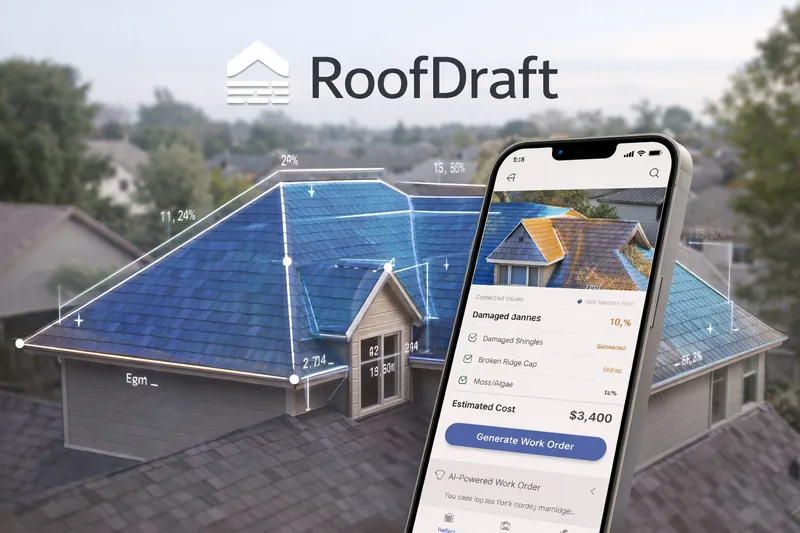
DreamFlow Pipeline: 7-step guided workflow (Capture → Transcript → Measure → Estimate → Review → Send → Complete). Features include AR LiDAR 3D scanning, video import with AI transcription, photogrammetry processing, AI-powered work order generation, professional PDF estimation, issue tracking with severity levels, peer-to-peer device sync, and full project lifecycle management across iOS, iPad (with LiDAR), and macOS.
AI Leverage
Voice-to-work-orders via transcription and GPT integration. AI-assisted estimate generation with itemized scope, labor estimates, and materials lists. Automated PDF estimate production with professional formatting.
Outcomes & Learnings
Unified platform accelerates contractor workflows from site capture through client-accepted estimates. AI-powered estimation increases accuracy and reduces manual work. Professional PDF generation and peer-to-peer sync enable faster project completion and team collaboration.
Launch System