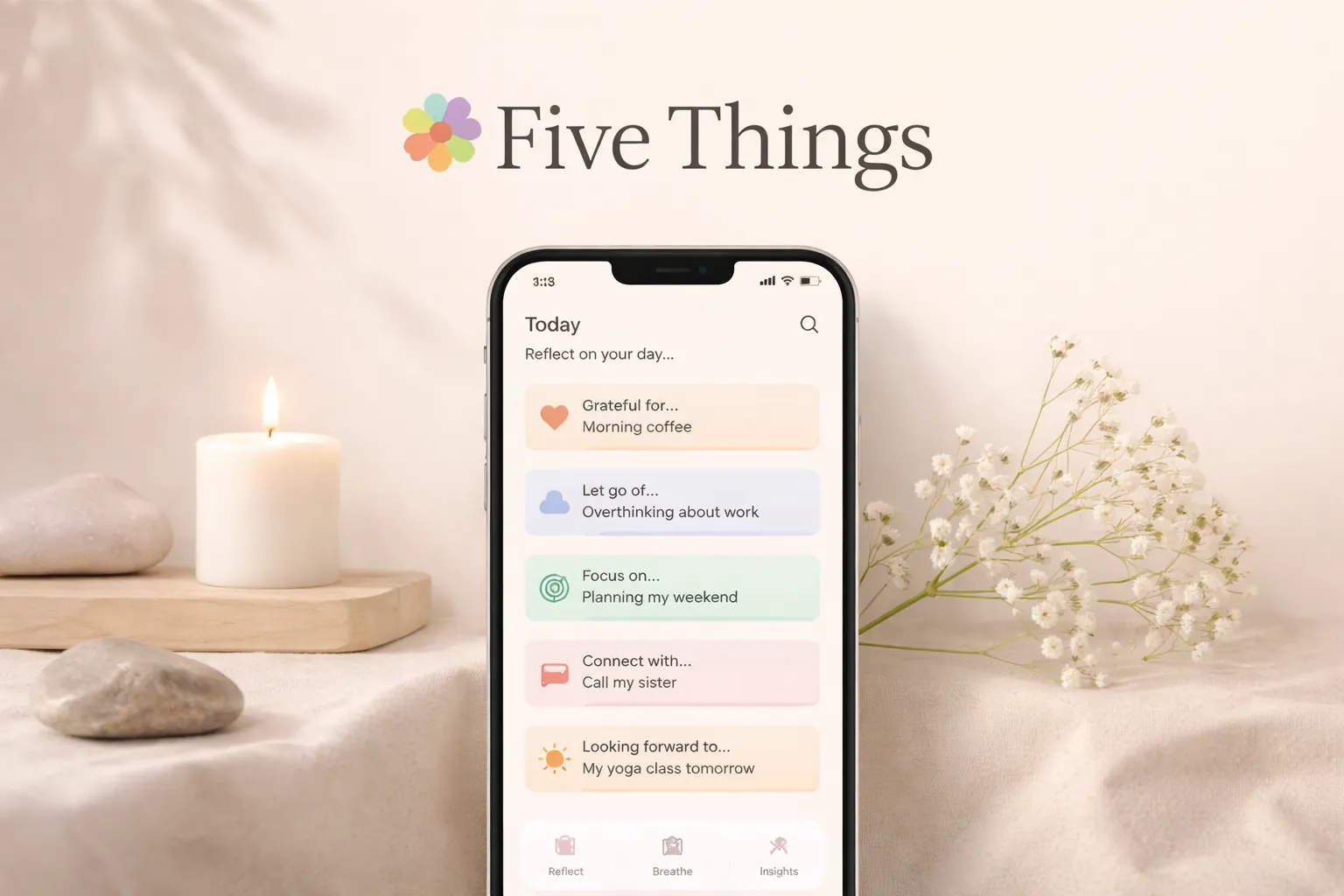
Five Things
Micro-habit cognitive reset for high-stress environments.
Problem Defined
"Existing mental-health tools are too high-friction for active crisis tempo."
Strategic Context
Saturated cognitive environments lead to sustained decision fatigue.
Competitive Imbalance
Wellness tools are too heavy for operational stress.
System Hypothesis
Simplifying the ritual increases adherence and resilience.
Process Architecture
How the system was designed, tested, and refined.
DEFINE
Identify friction in high-stress mental resilience tools.
- • Audited existing wellness app friction
- • Observed high-tempo operator behaviors
- • Mapped cognitive fatigue triggers
- • Initially designed a complex habit tracker which increased cognitive load
- • The tool MUST be sub-60 seconds to be used in active crisis modes
- • Pivoted to a micro-ritual model with zero navigation
MAP
Visualize the ritual-to-baseline recovery flow.
- • Mapped sensory grounding steps
- • Designed sequence for rapid state-shift
- • Initial sequences were too verbal; users in stress lose semantic processing
- • Stress recovery requires tactile and visual anchors over text
- • Rebuilt sequence to focus on high-contrast visual and haptic prompts
VALIDATE
Test ritual adherence in high-stress operational cycles.
- • Tested prototype with operators under load
- • Measured recovery to baseline state
- • Users skipped "guided" portions to get to the "end"
- • Rituals must be interactive, not just passive observers
- • Integrated haptic-confirmed ritual steps for active participation
EXECUTE
Build the zero-latency ritual interface.
- • Native iOS ritual engine
- • On-device processing layer
- • Haptic feedback system
- • Over-engineered the analytics dashboard early on
- • The value is the state-shift, not the data about the shift
- • Removed all navigation; app opens directly into the ritual
MEASURE
Calculate adherence and recovery efficacy.
- • Ritual adherence rate
- • Time-to-baseline recovery
- • Operator fatigue
- • Measured "engagement" instead of "utility"
- • High adherence in high-stress is the only metric that matters
- • Introduced drift detection to prompt rituals before crisis hits
Rule Application
How doctrine was operationalized.
Intellectual Rigor
01_INT- • Mapping cognitive load thresholds
- • Defining measurable state-shifts
75% daily adherence achieved in peak stress cycles
Tactical Execution
02_TAC- • Shipping single-ritual MVP first
- • Prioritizing zero-latency response
Sub-60s recovery to baseline achieved in trials
Human Calibration
03_HUM- • Reducing cognitive friction to zero
- • Designing for non-verbal states
Zero user rejection after removal of navigation burden
Machine Leverage
04_AI- • Signal tracking to identify behavioral drift
- • Predictive ritual prompting
AI detects impending fatigue before the operator expresses it
Product Architecture
Native iOS interface, on-device processing, zero-latency flows.
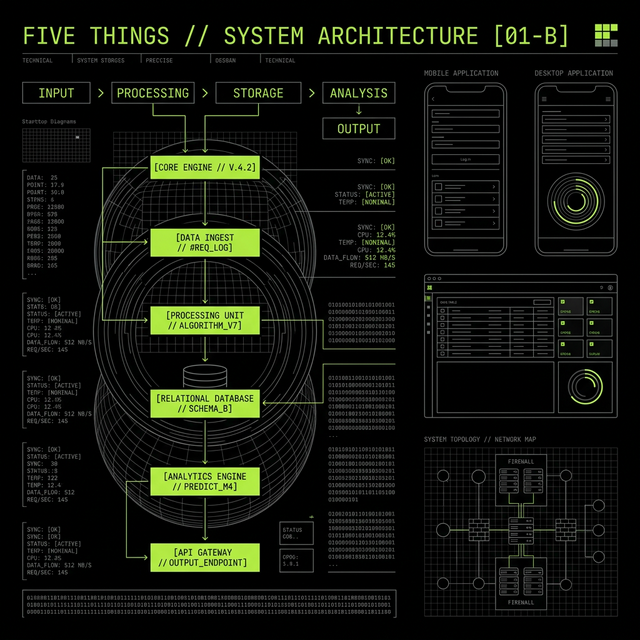
AI Leverage
Signal tracking to identify behavioral drift.
Outcomes & Learnings
Sub-60-second rituals beat complex apps for consistency.